PWC Buyer's Guide
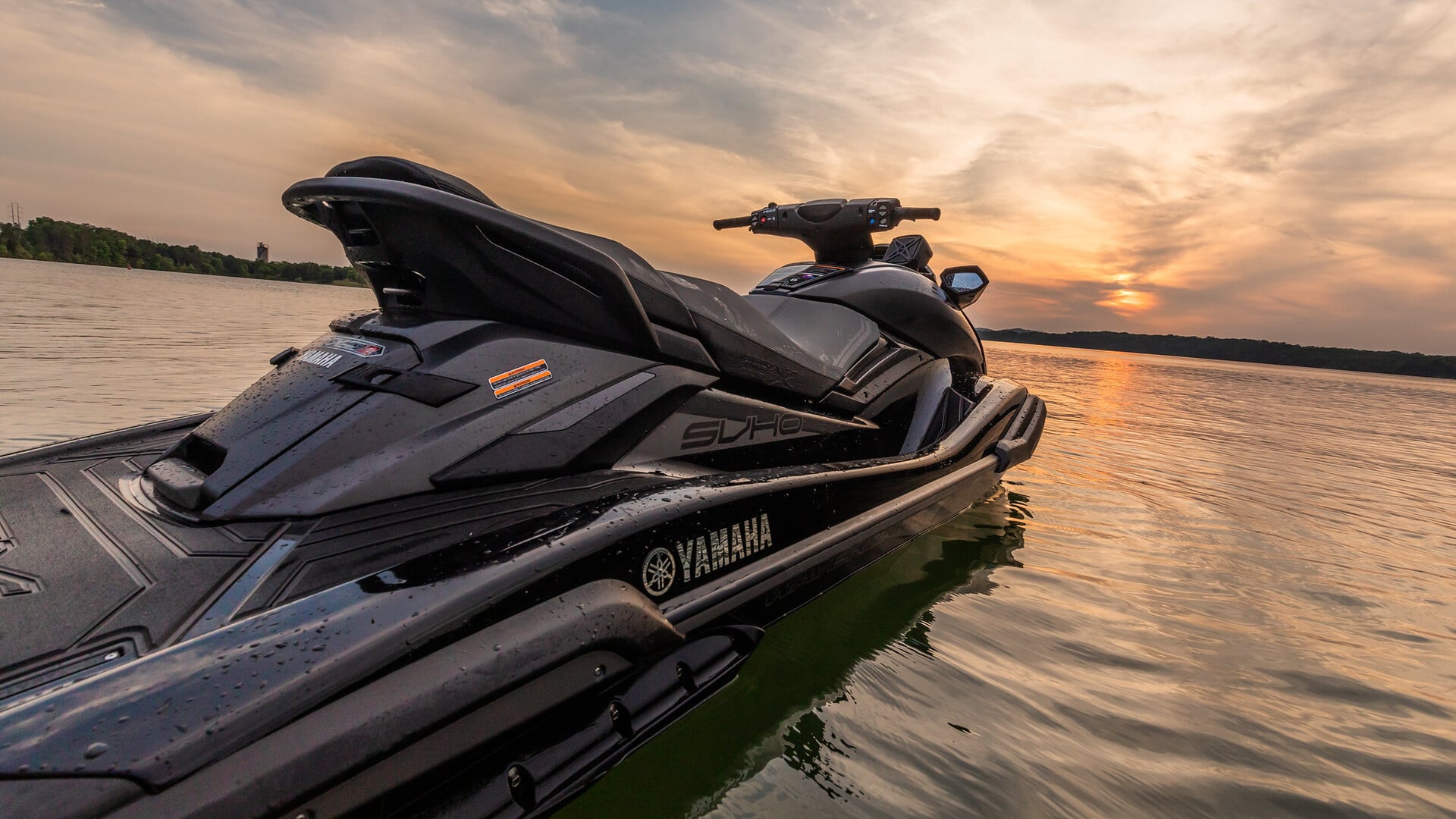
“Pure adrenaline on the water — ride, jump, and play.”
Why Is It Called a "PWC"?
Etymology & History
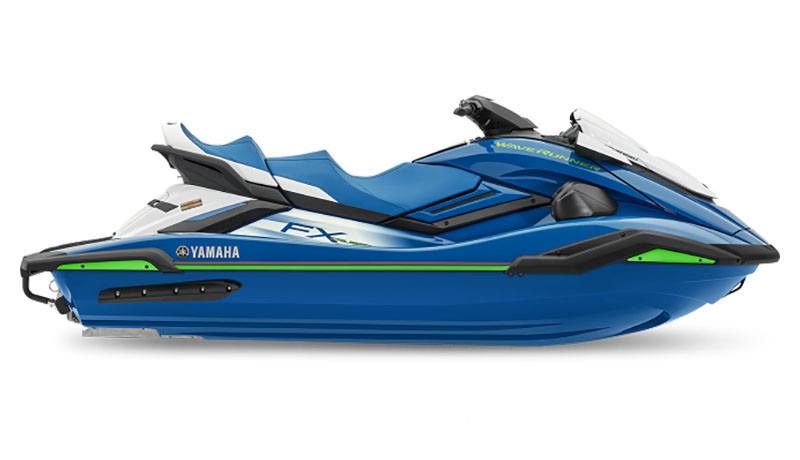
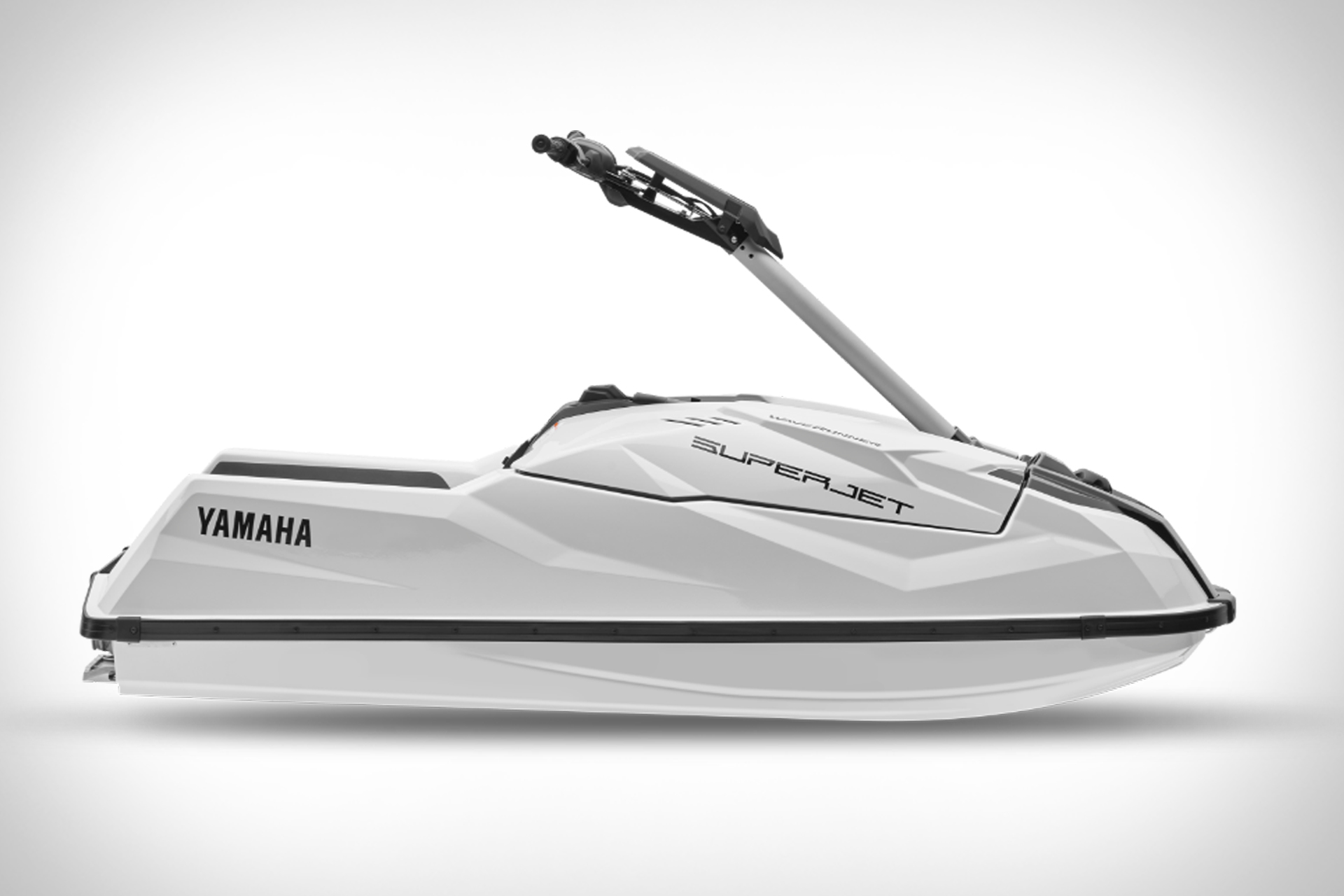
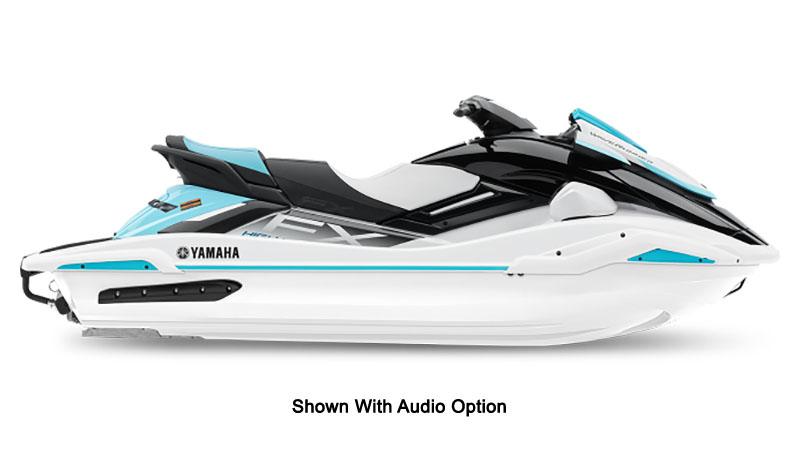
PWC stands for "Personal Watercraft" — a category name created by the Coast Guard to classify small, engine-powered water vehicles operated by a rider sitting, standing, or kneeling on the craft. The first mass-produced PWC was the Kawasaki Jet Ski, introduced in 1972. "Jet Ski" became the genericized trademark, similar to how "Kleenex" represents tissues. Other major brands include Sea-Doo (Bombardier, 1988) and WaveRunner (Yamaha, 1986).
What Is a PWC?
Overview
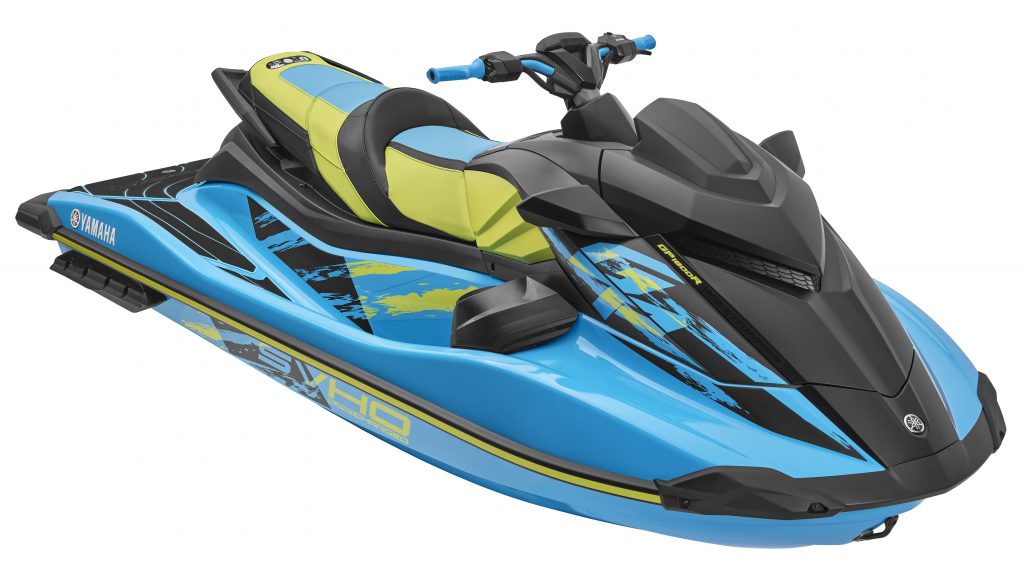
Personal watercraft are compact, jet-propelled vessels that seat 1–3 riders. They use an internal impeller (jet pump) rather than an exposed propeller for propulsion, making them safer around swimmers. Modern PWCs produce 60–325 HP with top speeds of 40–70+ mph. They're used for recreation, watersports towing, racing, rescue operations, and military applications. The global PWC market exceeds $2 billion annually.
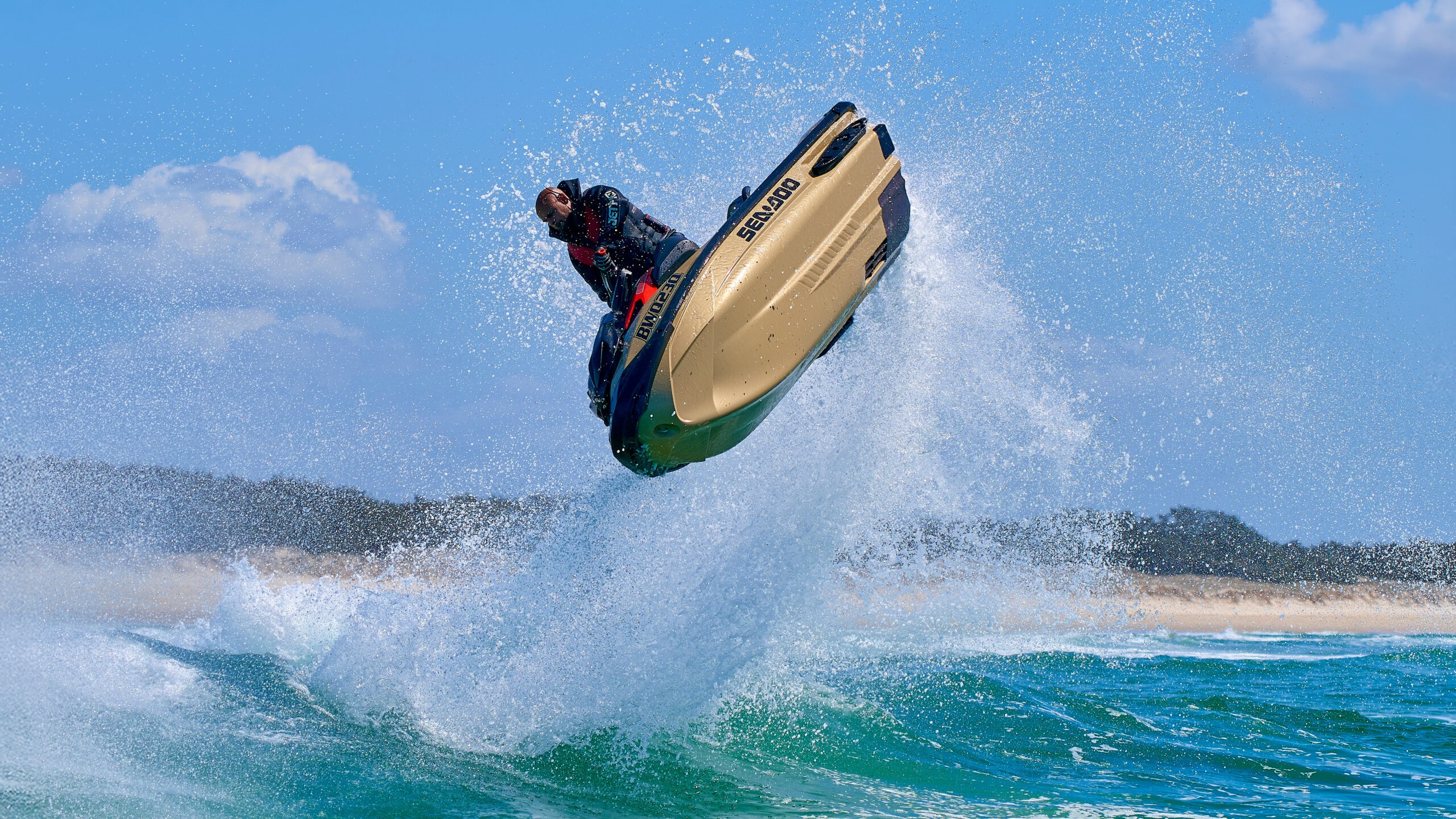
Wave jumping — pure adrenaline on the water
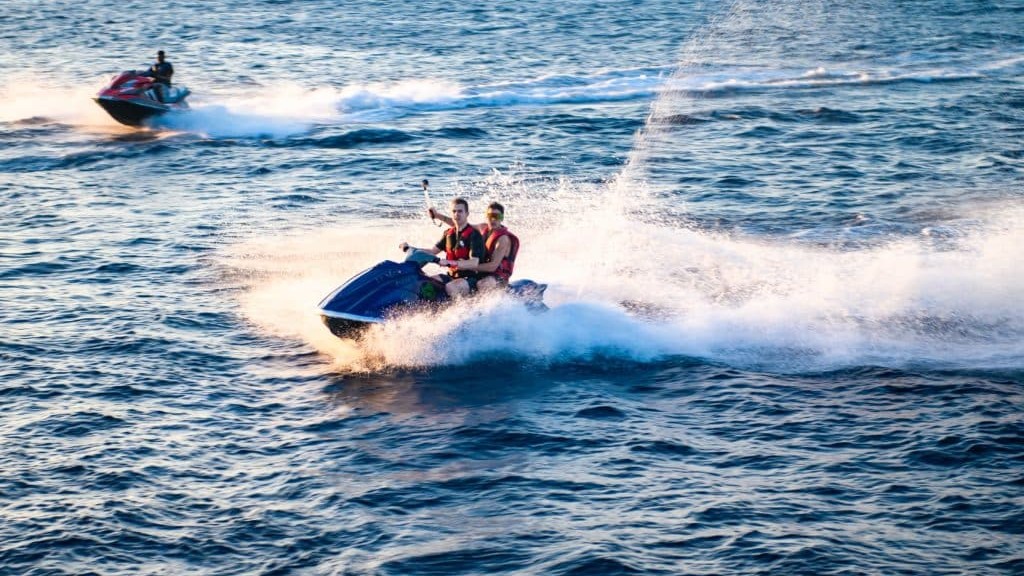
Family fun — easy to ride, impossible not to smile
The 5 W's of PWCs
Who, What, When, Where, Why
Who Buys Them?
Young adults (18–35) seeking thrills, families with teenagers, lake house owners, and budget-conscious water enthusiasts. Broadest age appeal of any watercraft — riders range from 16 to 65+.
What Are They?
A compact, jet-propelled watercraft seating 1–3 riders. Uses an internal impeller for propulsion (no exposed propeller). Engine power ranges from 60 to 325 HP with top speeds of 40–70+ mph.
When Are They Used?
Warm weather months — May through September in northern states, year-round in Florida, SoCal, and Gulf Coast. Quick outings of 1–3 hours are typical. Great for spontaneous rides.
Where Are They Used?
Lakes, bays, nearshore ocean, intracoastal waterways, and wide rivers. Heaviest usage in Florida, SoCal, Gulf Coast, and Midwest lake country. Some lakes restrict or ban PWCs.
Why Buy One?
Nothing else delivers this much fun per dollar on the water. A PWC is the most accessible, affordable, and thrilling way to get on the water. Low maintenance, easy to transport, and pure joy to ride.
Good For
- High-speed recreational riding and jumping waves
- Towing tubers, wakeboarders, and water skiers
- Exploring coastlines, islands, and waterways
- Racing and freestyle trick riding
- Quick, spontaneous water outings (easy to launch)
- Fishing (specialized fishing PWC models exist)
Why People Buy
- Instant fun — launch in minutes, no complex systems to manage
- Affordable entry to boating ($5K used to $20K new)
- Easy to tow — any SUV or truck can pull a PWC trailer
- Low storage footprint — fits in a garage or on a small trailer
- Thrilling performance — 0 to 60 mph in seconds
- Minimal maintenance compared to larger boats
Where They're Most Popular
Top boating destinations
Florida (ocean, bays, keys)
Year-round warm water riding, huge rental market
Southern California beaches
Ocean wave riding, bay cruising, and island hopping to Catalina
Lake Havasu, Arizona
PWC capital of the west — massive riding community and events
Gulf Coast beaches (TX, AL, FL panhandle)
Warm water, accessible launches, rental operations
Midwest lakes (Michigan, Wisconsin, Minnesota)
Cottage country riding, lake life essential
Who Buys Them?
Buyer demographics & profiles
Young Adults (18–35)
Thrill-seekers who want adrenaline and speed on the water without the cost of a full boat.
Families with Teens
Parents buying a PWC as a complement to the family boat. Teens love the independence and excitement.
Lake House Accessory Buyers
People who already own a boat but want a PWC for quick rides, exploring, and kids to use.
Budget-Conscious Boaters
Individuals who want on-the-water recreation at a fraction of the cost of a traditional boat.
Operating Costs
What it really costs to own one
Repairs & Common Breakdowns
What breaks and what it costs
Typical Repair Costs
Most Common Breakdowns
- Wear ring degradation from sand and debris — causes loss of acceleration and top speed
- Battery failure — PWCs sit unused for weeks and batteries drain or sulfate
- Impeller damage from rocks, rope, or debris — jet pump is the achilles heel
- Corrosion of internal components in saltwater environments
- Fuel system issues from ethanol absorption during storage
- Supercharger seal failures on high-performance models — expensive fix
Best Upgrades
Where to spend money for maximum value
Riva Racing intake grate and ride plate
Improves top speed, acceleration, and hook-up in rough water
Extended range fuel tank
Stock tanks are small (18–20 gal). Extra range for longer rides and exploration
GPS-enabled speed display
Know your exact speed, track routes, and set speed limits for younger riders
Hydro-Turf mat kit
Better grip when standing, more comfortable kneeling, and custom look
Bilge auto-flush system
Automatic freshwater flush after every ride — crucial for saltwater use
Trailer upgrade with disc brakes
Safer towing, especially at highway speeds and in hilly terrain
Water Compatibility
Where you can (and can't) take it
Perfect playground for PWCs. Open water, warm weather, and no restrictions.
Great for exploring protected coastal waters. Flush with freshwater after every ride.
Fun in moderate conditions. Stay within sight of shore and respect swell conditions.
Wide, slow rivers work. Fast current, debris, and shallow sections are hazards.
Close to shore is fine. Conditions change rapidly — don't venture far from the launch.
Extremely dangerous. Limited range, no shelter, and difficult rescue if disabled.
Limitations & Weather Restrictions
Know before you go
Most PWCs carry 15–20 gallons of fuel. At full throttle, range is only 60–100 miles. Plan refueling carefully.
Price Ranges (Brand New)
What to expect across budget levels
PWC Brands & Models
3 brands, 8 models in our database
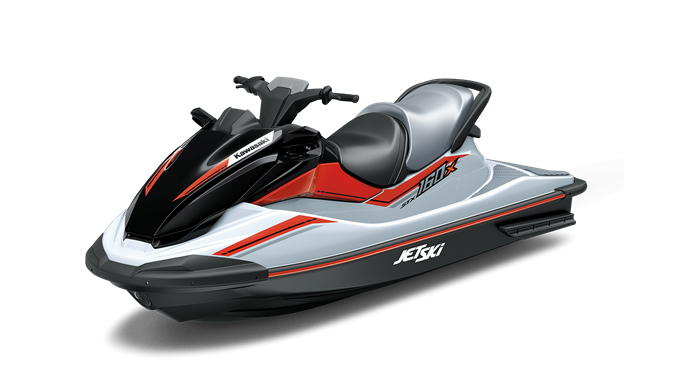
Kawasaki
2 pwc models

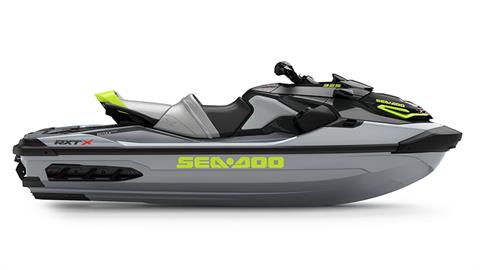
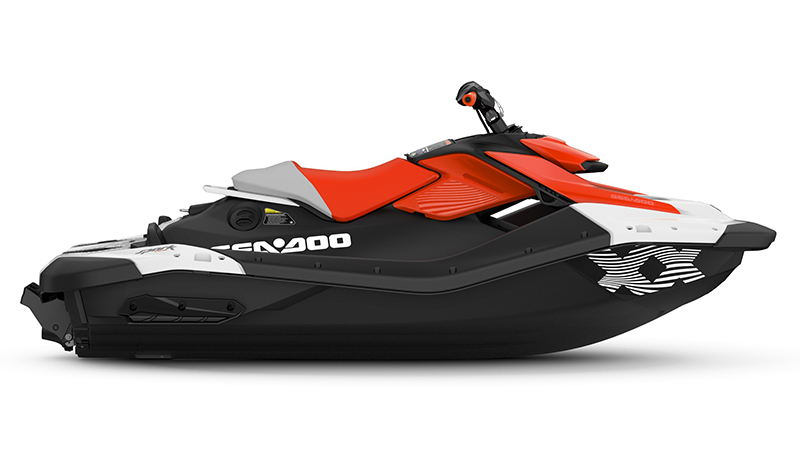
Sea-Doo
2 pwc models