Pontoon Buyer's Guide
“The floating living room — because life is better on the water.”
Why Is It Called a "Pontoon"?
Etymology & History
The name "pontoon" comes from the flat-bottomed cylindrical tubes (called pontoons) that support the boat's flat deck. The word derives from the Latin "ponto" meaning flat-bottomed boat, through the French "ponton." Pontoon boats were first commercially produced in the 1950s when a Minnesota farmer welded beer kegs together to create a floating platform. That crude concept evolved into today's multi-billion dollar pontoon boat industry.
What Is a Pontoon?
Overview
Pontoon boats feature a broad, flat deck supported by two or three aluminum tubes (pontoons). They prioritize space, stability, comfort, and social interaction over speed and performance. Ranging from 16 to 30+ feet, they're powered by single outboard engines typically producing 25–400 HP. Pontoons are the fastest-growing segment of the recreational boating market, outselling every other boat type in North America.
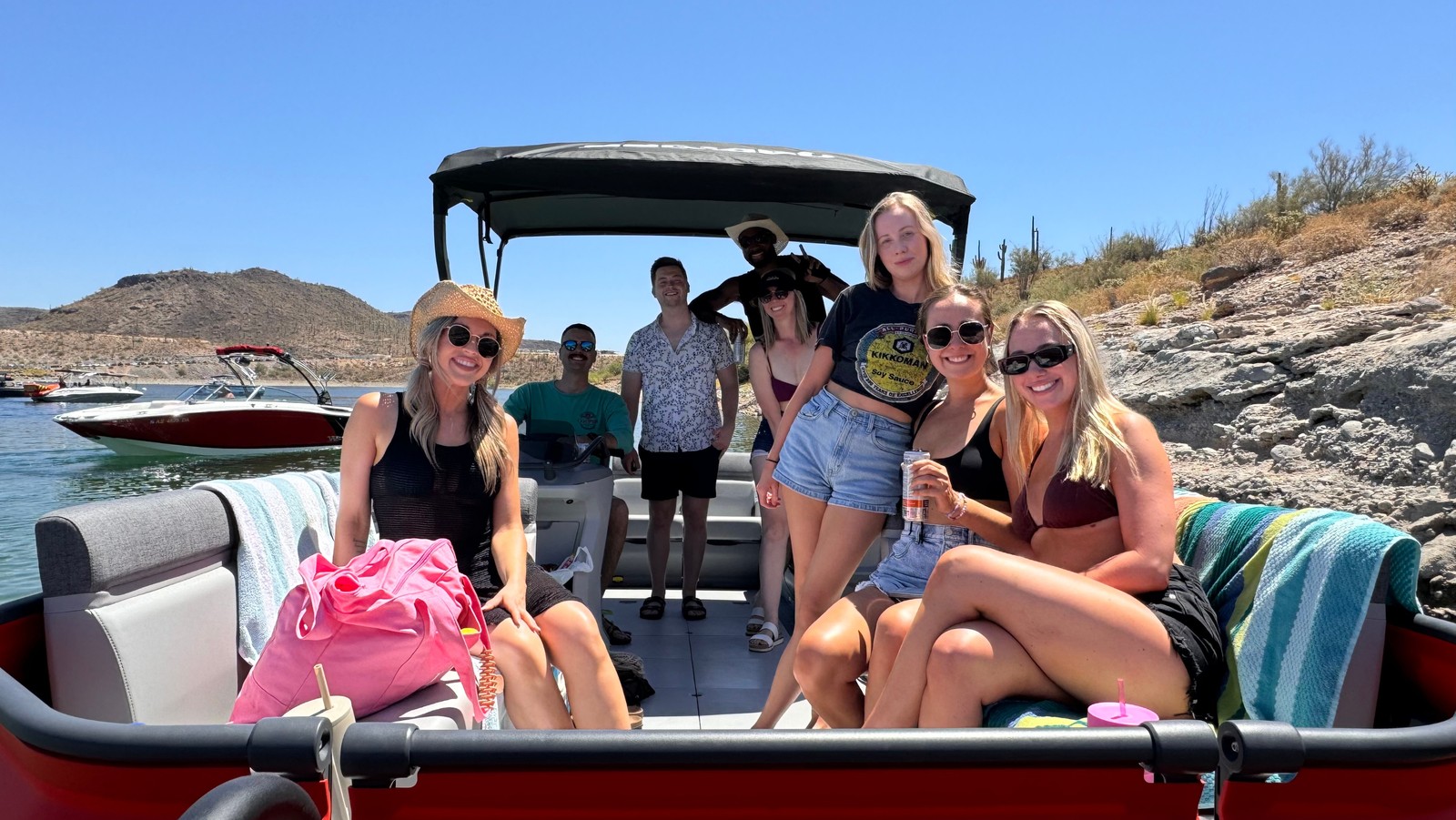
The ultimate social platform — friends, food, and lake life

Sunset cruises — the pontoon's signature experience
The 5 W's of Pontoons
Who, What, When, Where, Why
Who Buys Them?
Lake house owners, retirees, families with young children, first-time boat buyers, and social boaters. The broadest demographic of any boat type — ages 25 to 75+. Income range from $60K (used) to $150K+ (new premium).
What Are They?
A flat-deck recreational boat supported by two or three aluminum tubes (pontoons). Designed for stability, comfort, and socializing. Features lounge seating, dining tables, swim platforms, and optional fishing features.
When Are They Used?
Primarily warm months — May through September in northern states, year-round in the south. Weekend afternoons and holidays are peak usage. Many pontoons see sunset cruise duty multiple evenings per week.
Where Are They Used?
Freshwater lakes and reservoirs nationwide, with the strongest concentration in the Midwest lake country. Also popular on slow-moving rivers and protected waterways. Not for saltwater or ocean use.
Why Buy One?
No other boat gives you this much usable space, stability, and social capability for the price. A pontoon turns any lake into your personal waterfront living room. It's the most accessible, family-friendly boat you can buy.
Good For
- Entertaining friends and family — room for 10–16+ passengers
- Leisurely cruising on calm water
- Fishing (many models have fishing-specific features)
- Swimming and floating — easy water access from the low deck
- Sunset cocktail cruises
- Sandbar and beach gatherings
Why People Buy
- Most usable space per dollar of any boat type
- Incredibly stable — almost impossible to tip over
- Easy to drive — most forgiving boat for beginners
- Low maintenance compared to V-hull boats
- Shallow draft — can access very shallow water
- The "party boat" — perfect for social gatherings on the water
Where They're Most Popular
Top boating destinations
Minnesota ("Land of 10,000 Lakes")
The birthplace and spiritual home of the pontoon boat
Wisconsin, Michigan, Indiana lakes
Massive pontoon culture throughout the Midwest lake country
Lake of the Ozarks, Missouri
Pontoon paradise — huge cove system perfect for pontoon living
Florida inland lakes and rivers
Year-round usage, huge retiree boating population
Table Rock Lake, Norris Lake, Smith Mountain Lake
Popular southern reservoir lakes with active pontoon communities
Who Buys Them?
Buyer demographics & profiles
Lake House Owners
Families with lake homes or cabins who dock the pontoon permanently. The pontoon IS the lake house lifestyle.
Retirees & Empty Nesters
Seeking comfortable, easy-to-operate boats for leisurely days on the water. Stability and ease matter most.
First-Time Boat Buyers
Families buying their first boat. Pontoons are the easiest to learn and the safest for kids.
Social Boaters
People who prioritize entertaining, socializing, and gathering with friends over performance or fishing.
Operating Costs
What it really costs to own one
Repairs & Common Breakdowns
What breaks and what it costs
Typical Repair Costs
Most Common Breakdowns
- Upholstery deterioration from UV and moisture — vinyl cracks and mildew develops
- Pontoon tube corrosion (especially in saltwater or high-mineral lakes)
- Motor mount stress from shallow water grounding or impact
- Bimini top frame fatigue — wind catches the canopy and stresses mounting hardware
- Electrical gremlins from exposed wiring getting wet under the deck
- Gate latch failures — frequent boarding puts wear on entry gate hardware
Best Upgrades
Where to spend money for maximum value
Third pontoon (tritoon conversion)
Transforms handling, speed, and stability. Allows higher HP rating and better rough water performance.
Upgraded marine stereo with tower speakers
Pontoons are social boats — great sound makes every outing better
LED underdeck and accent lighting
Stunning at night, extends evening usage, and helps with safety
Fishing package (live well, rod holders)
Makes your pontoon a legitimate fishing platform without sacrificing comfort
Power-assist steering
Reduces arm fatigue on larger pontoons, makes docking much easier
Waterslide or swim ladder
Kids (and adults) love it — makes swimming days even more fun
Water Compatibility
Where you can (and can't) take it
The pontoon's natural habitat. Flat water, lazy days, perfect stability.
Works well on wide, calm rivers. Be cautious of current pushing the flat hull.
OK close to shore, but waves build fast and pontoons don't handle chop well.
Protected bays only. Rinse thoroughly after any saltwater exposure.
Extremely dangerous. Pontoons are not designed for ocean conditions.
Absolutely not. The flat deck and tube design cannot handle rapids.
Limitations & Weather Restrictions
Know before you go
Pontoons ride on top of waves rather than cutting through them. In 2+ foot chop, the ride gets rough and uncomfortable.
Price Ranges (Brand New)
What to expect across budget levels
Pontoon Brands & Models
11 brands, 11 models in our database
Bennington
1 pontoon model

Crest
1 pontoon model
Godfrey
1 pontoon model

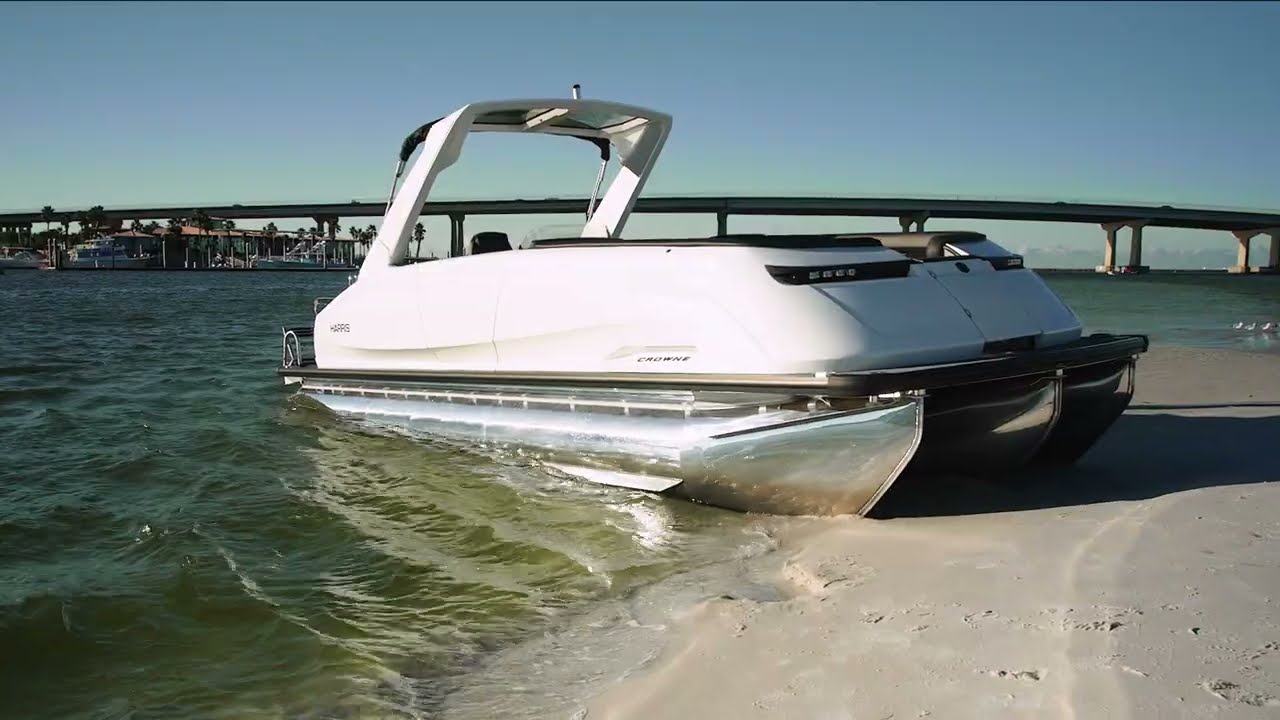
Harris
1 pontoon model
Lowe
1 pontoon model

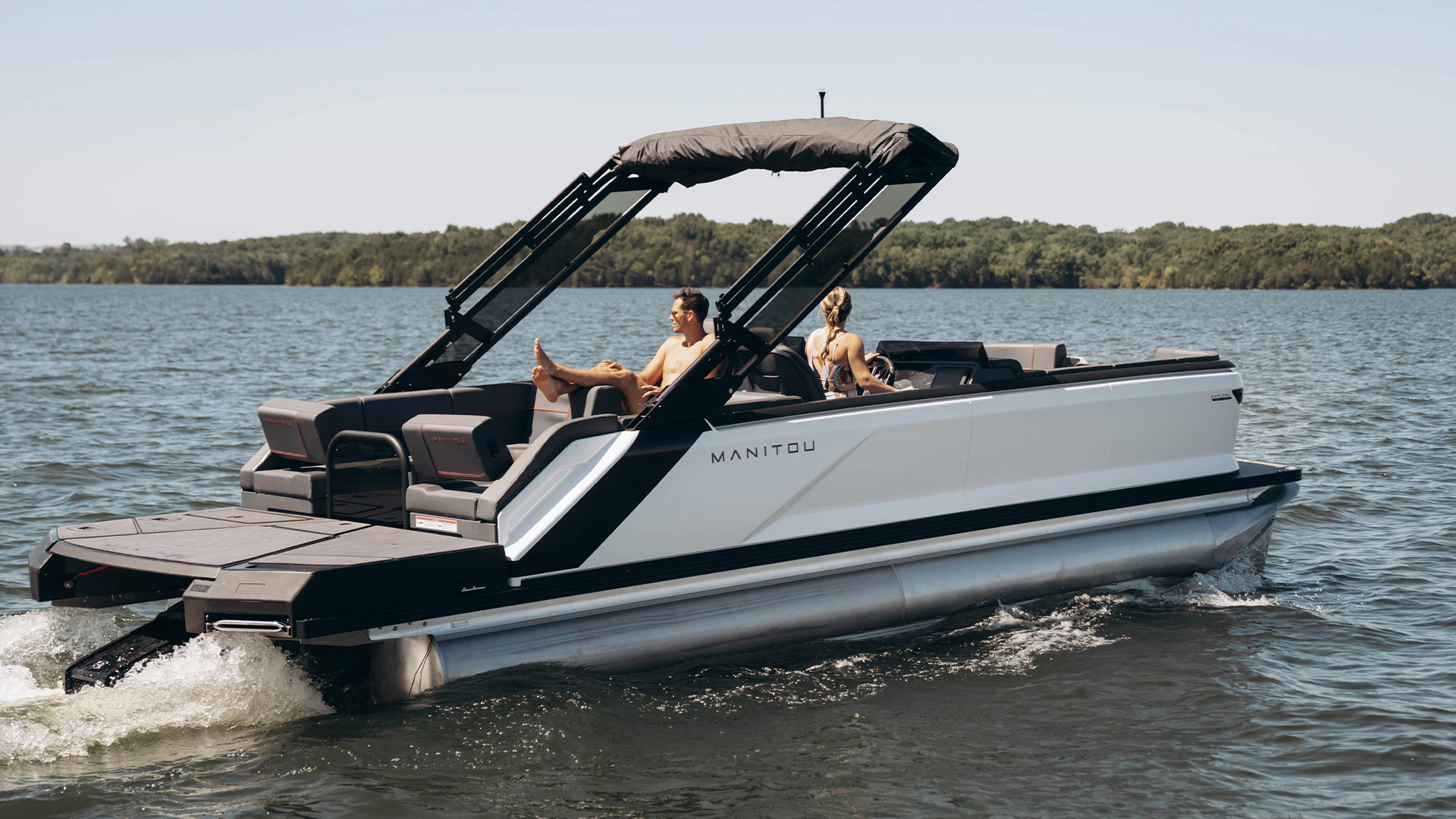
Manitou
1 pontoon model
Ranger Reata
1 pontoon model

Sea-Doo
1 pontoon model

Starcraft
1 pontoon model

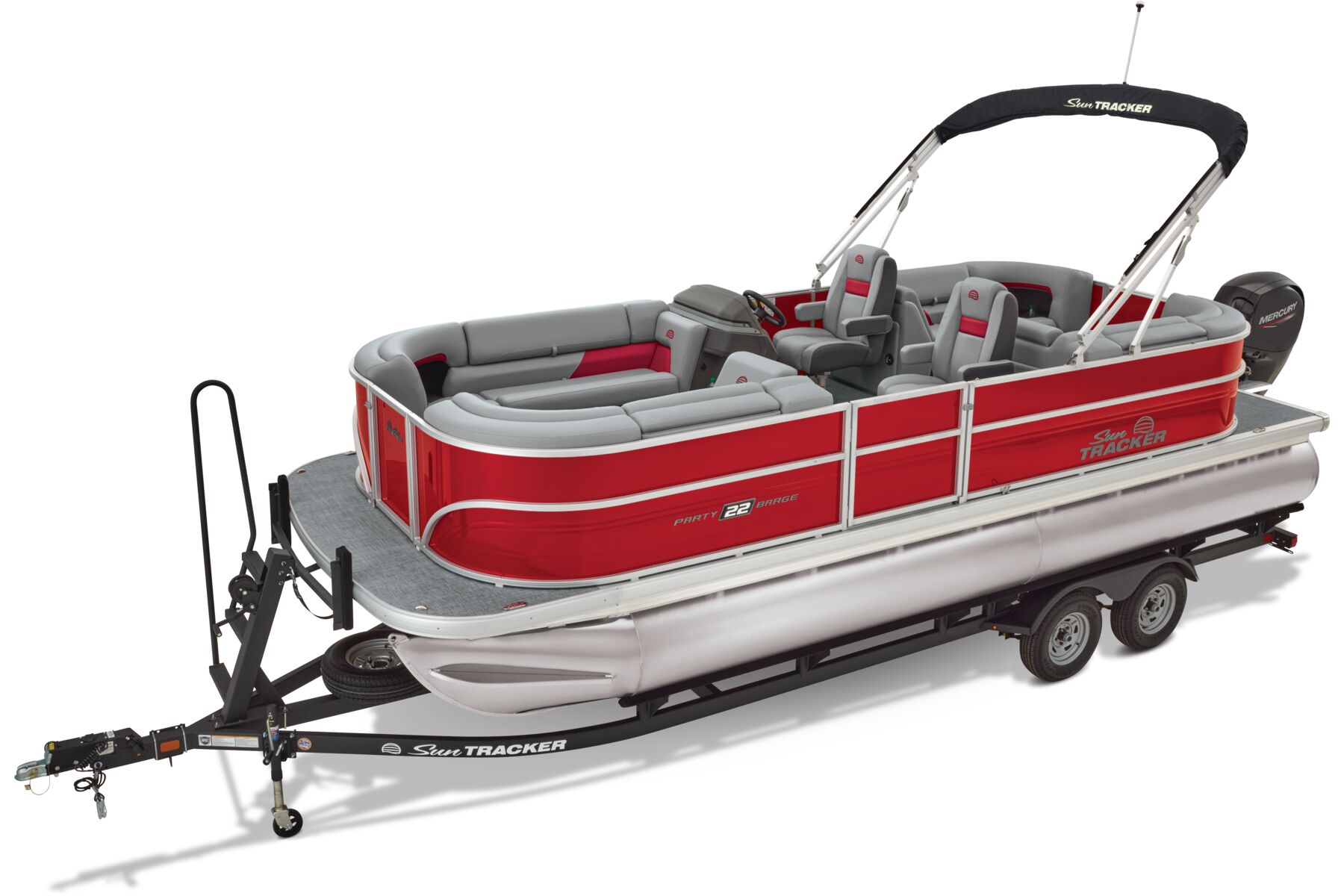
Sun Tracker
1 pontoon model
Sylvan
1 pontoon model